The nice people over at the Product Management Pulse interviewed me a week or so ago - you can enjoy the interview here. And welcome to everyone discovering ack/nak for the first time care of the Product Management Pulse.
The podcast references a lot of the topics we've been discussing here over the years - if there are specific ideas you'd like to explore in more detail, let me know in the comments.
Friday, February 27, 2009


confidential: product management job openings
Big thanks to Tyler Colby Hill for sending me the information on these three opportunities in the greater New York City area, specifically Westport CT:
If you're interested in more detail on any of the above positions, please contact Tyler at:
tyler@tylerchill.com
Program Manager: Financial Applications
Large hedge fund has grown to the point where they are essentially adding a layer of management. They are looking for a program manager to corral the various portfolio management and algo trading apps and align them with the directors' (sometimes high-level) wishes. About 8 BA and PM reports.
Program Manager: Core Technology (non-financial applications)
Same as above but financial experience not required and four direct reports.
Product Manager: Core Technology
A software product manager who can take ownership of the full product life cycle.
The emphasis is for people who can create a program management and product management functions out of a currently ad-hoc arrangement.
If you're interested in more detail on any of the above positions, please contact Tyler at:
tyler@tylerchill.com
kudos: superb communication from msft
I'm sorry to say I have very low expectations when it comes to the Windows operating system specifically, and MSFT in general.
Some of it has to do with being a converted Mac guy, some of it is simply an appreciation for how durned hard it can be to keep a Windows box alive over time, what with all the crufty registry and DLL and odd background process weirdness you have to deal with. And the malware, enough with the malware, and the bloated apps, and the strange incantations required to make applications work, and so on and so on.
One sure way to overcome low expectations is to communicate better. I won't bore you with the same old tired mantras of "listen to the market" and "build things people want to buy" - that's what the rest of this blog is for. That and funny articles about New York Times staffers playing D&D.
What I will ask you to consider is the very nice job the kids at MSFT are doing with their Engineering Windows 7 blog, especially their most recent posting regarding changes made to Windows 7 between the beta and the release candidate (RC).
These guys are doing everything right in my book - all the more amazing when you consider this blog relates to the development of an operating system that a majority of consumers may end up using in the next few years. It gives me the vibe of a well-run startup, not a tottering megalith. It's tone is geniunely market-focused; it lacks the highly-parsed, "we know what's good for you so that's what we're building" gestalt I expected from MSFT. They're not just thinking different, they're doing different, to borrow a marketing phrase from Saint Steve. And I like it.
If this is the approach MSFT is going to take with the rest of their W7 work, it bodes very well for the company and customers alike. Not because they'll get everything right on Day 1, but because they've got their heads screwed on correctly when it comes to how to engage their customers as clients - not just consumers.
Some of it has to do with being a converted Mac guy, some of it is simply an appreciation for how durned hard it can be to keep a Windows box alive over time, what with all the crufty registry and DLL and odd background process weirdness you have to deal with. And the malware, enough with the malware, and the bloated apps, and the strange incantations required to make applications work, and so on and so on.
One sure way to overcome low expectations is to communicate better. I won't bore you with the same old tired mantras of "listen to the market" and "build things people want to buy" - that's what the rest of this blog is for. That and funny articles about New York Times staffers playing D&D.
What I will ask you to consider is the very nice job the kids at MSFT are doing with their Engineering Windows 7 blog, especially their most recent posting regarding changes made to Windows 7 between the beta and the release candidate (RC).
These guys are doing everything right in my book - all the more amazing when you consider this blog relates to the development of an operating system that a majority of consumers may end up using in the next few years. It gives me the vibe of a well-run startup, not a tottering megalith. It's tone is geniunely market-focused; it lacks the highly-parsed, "we know what's good for you so that's what we're building" gestalt I expected from MSFT. They're not just thinking different, they're doing different, to borrow a marketing phrase from Saint Steve. And I like it.
If this is the approach MSFT is going to take with the rest of their W7 work, it bodes very well for the company and customers alike. Not because they'll get everything right on Day 1, but because they've got their heads screwed on correctly when it comes to how to engage their customers as clients - not just consumers.
Thursday, February 26, 2009
sigh: yahoo decides to build products customers want
New Yahoo! CEO Carol Bartz has reorganized Yahoo! to make it easier for Yahoo! to deliver products that Yahoo! users will react to with the word "wow".
Wow.
In a blog post titled Getting our House in Order, Ms. Bartz lays out her management manifesto using folksy language like "People here have impressed the hell out of me" and "Look for this company's brand to kick ass again."
I! think! that! is! great!
But I was a bit disappointed by the following paragraph:
Umm. What were they doing before?
Then I read this. . .
And was even more disappointed. Because really, what were they doing before?
I know they have product managers because good (and even some great) product managers I've worked with before are at Yahoo! and they understand how to build good (and even some great) products.
Is it just that they weren't able to blaze past the crusty institutional barriers that had accreted over the years? Or that their superiors "knew what the market wanted" and suppressed market-focused innovation?
I'm guessing some of both.
Wow.
In a blog post titled Getting our House in Order, Ms. Bartz lays out her management manifesto using folksy language like "People here have impressed the hell out of me" and "Look for this company's brand to kick ass again."
I! think! that! is! great!
But I was a bit disappointed by the following paragraph:
We're also leaning on this team to make sure we're all hearing the voice of our customers (consumers and advertisers). I'm singularly focused on providing you with awesome products. Period. The kind that get you so excited, you have to tell someone about them. Whether on your desktop, your mobile device, or even your TV.
Umm. What were they doing before?
Then I read this. . .
And that takes a real understanding of what you want/need/love/hate, how you’re using our products, and what you find simple, intuitive, easy and fun. Who wants innovation for innovation’s sake if it doesn’t make your life easier, more efficient, more productive? So expect us to hear you better and take better care of you.
And was even more disappointed. Because really, what were they doing before?
I know they have product managers because good (and even some great) product managers I've worked with before are at Yahoo! and they understand how to build good (and even some great) products.
Is it just that they weren't able to blaze past the crusty institutional barriers that had accreted over the years? Or that their superiors "knew what the market wanted" and suppressed market-focused innovation?
I'm guessing some of both.
Wednesday, February 25, 2009
question: who taught you to be a PM?
Back in the summer of 2006 I wrote that internships were not the same thing as apprenticeships. It was one of my better efforts, certainly more substantive than some other bits I've scattered about here over the years.
What I want to know is how product managers learn their craft - and who teaches them. Is it other product managers? Is it development leads? Marketing people? Do they get it all from classes? From books?
The Thoughtful Reader will conclude "it's some combination of all of those, of course."
But is that the best way to learn?
If you could go back and do it all over again, how would you have chosen to learn your craft? What difference would it have made in your career?
I wonder.
goal: plain language
Have you ever spent a meaningful amount of time listening to a doctor talk in "doctor-ese"? Ever walked out of an appointment wondering "what did the doctor say?"
Health literacy is defined in Health People 2010 as: "The degree to which individuals have the capacity to obtain, process, and understand basic health information and services needed to make appropriate health decisions" (source).
Health literacy is a two-way street - it holds providers responsible for using plain language that can be understood, and it holds patients responsible for asking questions - for "speaking up" - when they don't understand.
We can all relate to this. Now let's see if we can find a corollary that will apply to our craft.
Have you ever read a proposal, a marketing piece, a meeting agenda, that just baffled you? That failed to get to the point? That used an unreasonable amount of jargon, or assumed a high level of previous understanding of the topic being discussed?
Have you ever sat through a meeting and walked out wondering "what did that person say?"
I have. It stinks. And it's always been partially my fault every time it happened - because when I have a low "domain literacy" related to whatever was being discussed, I need to speak up and seek clarity if the speaker isn't offering it up.
I've learned through painful experience that there is no shame in not understanding, in asking for clarification, in seeking to state problems as plainly as possible.
Even the most intractably difficult issue benefits from plain language, from small words, from simple sentences. All of which should be delivered calmly, and unselfconsciously.
A smart sales guy I know makes a point of saying "I'm not smart enough to hide things, so I lay out my position up-front with my prospects so they know what I'm all about."
There is a lot about transparency these days - one sure way to become more transparent is to try to be less clever. One step we can take in this direction is to use plain language.
Now don't get me wrong - I'm still a huge a fan of the well-turned phrase and the perfect word. But when dealing with people with a lower domain literacy, less is more. You will be perceived as a smarter, more in-tune person by "dumbing-down" until you have either reached their level of domain liteacy or they learn enough to raise their own.
Health literacy is defined in Health People 2010 as: "The degree to which individuals have the capacity to obtain, process, and understand basic health information and services needed to make appropriate health decisions" (source).
Health literacy is a two-way street - it holds providers responsible for using plain language that can be understood, and it holds patients responsible for asking questions - for "speaking up" - when they don't understand.
We can all relate to this. Now let's see if we can find a corollary that will apply to our craft.
Have you ever read a proposal, a marketing piece, a meeting agenda, that just baffled you? That failed to get to the point? That used an unreasonable amount of jargon, or assumed a high level of previous understanding of the topic being discussed?
Have you ever sat through a meeting and walked out wondering "what did that person say?"
I have. It stinks. And it's always been partially my fault every time it happened - because when I have a low "domain literacy" related to whatever was being discussed, I need to speak up and seek clarity if the speaker isn't offering it up.
I've learned through painful experience that there is no shame in not understanding, in asking for clarification, in seeking to state problems as plainly as possible.
Even the most intractably difficult issue benefits from plain language, from small words, from simple sentences. All of which should be delivered calmly, and unselfconsciously.
A smart sales guy I know makes a point of saying "I'm not smart enough to hide things, so I lay out my position up-front with my prospects so they know what I'm all about."
There is a lot about transparency these days - one sure way to become more transparent is to try to be less clever. One step we can take in this direction is to use plain language.
Now don't get me wrong - I'm still a huge a fan of the well-turned phrase and the perfect word. But when dealing with people with a lower domain literacy, less is more. You will be perceived as a smarter, more in-tune person by "dumbing-down" until you have either reached their level of domain liteacy or they learn enough to raise their own.
Tuesday, February 10, 2009
news: new bc voice-over
A nice flash demonstration for the new Emmi+Healthwise solution is up on the web, with voice-over work from yours truly. Let me know what you think.
rewind: microwaving a frozen white castle burger
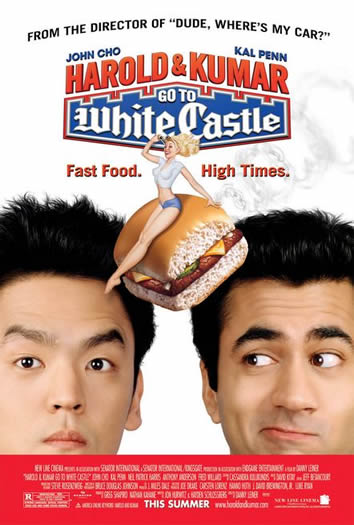 Motivated by the Robert Altman "homage" classic Harold & Kumar Go to White Castle, my wife and I decided that we would bring a sack of sliders to my daughter's T-ball game last Friday night for an impromptu picnic. Since you always end up buying more of the damned things than you could ever possibly eat in one session, the left-overs went into the freezer, still encased in their cardboard sleeves and cozied up into slider-pairs.
Fast-forward to last night when an affliction of the "urge" struck me full-force - and I remembered that I had sliders in the freezer. Lacking any special hidden knowledge of how to release them from their vitrified state, I threw two into the microwave, hit the magic "1" button (for a 1-minute nuke) and crossed my fingers.
Sixty seconds on high (ha ha) later, I had two perfectly hot sliders with warm (but not hot) buns. YMMV, but I could see going anywhere from 45 to 60 seconds with similar success.
Advice: Anything more than 60 seconds and you'd break down the steamed patty and dissolve the onions, leaving you with hot magma and regret. Anything less than 45 seconds and you've probably have a cold wafer of suspiciousness encased between two tepid onion-scented bread handles.
(Originally posted in June of 2006 - I was much funnier then. Parenthood is reducing my mind to something very close to an over-nuked slider.)
video: how to take your community to the next level
Former colleague, I Can Has Cheezburger? boss and overall good guy Ben Huh gave a presentation at last year's FOWA conference on the topic of "How to Take Your Community to the Next Level" that you will enjoy. Grab a delicious beverage and make yourself comfortable, it isn't quick, but it is good.
linky: product management meets pop culture
If you are:
1. A current or aspiring product manager
2. Someone who appreciates thoughtful, concise and witty writing
3. Prone to do what I ask you to do
Then go visit Christopher Cumming's blog Product Management Meets Pop Culture.
While I think many if not all of the topics we product managers can write about have already been written about (over and over and over again), I still enjoy the fresh take Chris (or is it Christopher) has on some of the classics.
And I do very much love all the vintage comic book covers and art sprinkled through his site. It's a very readable blog, and I appreciate that more than I can say.
Go forth and read it. Then follow him on Twitter and join the conversation.
1. A current or aspiring product manager
2. Someone who appreciates thoughtful, concise and witty writing
3. Prone to do what I ask you to do
Then go visit Christopher Cumming's blog Product Management Meets Pop Culture.
While I think many if not all of the topics we product managers can write about have already been written about (over and over and over again), I still enjoy the fresh take Chris (or is it Christopher) has on some of the classics.
And I do very much love all the vintage comic book covers and art sprinkled through his site. It's a very readable blog, and I appreciate that more than I can say.
Go forth and read it. Then follow him on Twitter and join the conversation.
for sale: belstaff colonial canvas shoulder bag

Loyal ack/nak reader Brad has a Mountain Brown Belstaff Colonial Canvas Shoulder Bag (catalog number 756115) that is "surplus to his requirements".
You have money.
If you would like to exchange your money for his bag, you should email Brad at:
brad.rickelman@gmail.com
and let him know you're interested.
Note 1 - I'm sharing news of Brad's bag as a service to the ack/nak community - I invite both parties to any transaction to perform the appropriate due diligence.
Note 2 - If you happen to have a Mountain Brown Belstaff Colonial Canvas Medium or Large Man Bag that you'd like to trade for a Tan Shoulder Bag, let me know.
Here is Brad's story:
Bob
Enjoy the site and particularly your posts not only on product management but also on notebooks/paper/pens, etc.
After reading your posts regarding the Belstaff shoulder bag, it sounded like something I would like. My sister happens to live in London, and last Fall found a Belstaff Colonial Canvas Shoulder bag, model 756115 - Shoulder Bag in Mountain brown (I think it was at their Manchester store). Image is attached (not because you don't know what it is, but their colors and model line names are baffling to me).
Anyway – I got the bag, and have tried using it for a while – and it is not me. Nothing wrong with your reviews or expectations, it just is not me.
So here I have a rather expensive bag I am not using, and there are plenty of people who probably would like one, but can't get one.
So there you go. We're officially in the matchmaking business here now. As Belstaff continues to pare back their investment in the Colonial Canvas line, I expect I'll be doing more of this.
Thursday, February 05, 2009
lexisnexis: product management job opening
LexisNexis Product Management Job Description
Basic Job Function:
Accountabilities:
For more information, dear reader, please contact John Cray, Director, Product Management at LexisNexis InterAction, using any of the following "communication modalities":
john.cray@lexisnexis.com
2000 Clearwater Drive, Suite 100
Oak Brook, Illinois 60523
630.572.1400 main
630.371.4538 direct
630.572.1818 fax
Basic Job Function:
This position is responsible for owning a product or substantial modular portion of a CRM enterprise software product, and driving the definition and execution of product plans from vision, requirements, and initial design through market launch and rollout. The position cultivates new product ideas through market research and analysis, and evaluates the market potential of these ideas. The position defines and prioritizes product requirements, works with the development team on product creation, and continuously confirms that the planned end result will meet specified requirements. As a product owner, the position must also be a representative expert for the rest of the organization on the product, and must ensure that all departments are prepared for successful product delivery and go-to-market readiness.
Accountabilities:
1. Create and implement product vision, direction, and business plans, including product plans, product migration and evolution, and product life cycle and retirement.
2. Develop conceptual and evolutionary product plans that meet business objectives through a comprehensive long-term vision for the product and its ongoing fit within target markets. This includes performing business analysis and evaluating revenue potential, and identifying and assessing business opportunities and determining strategic fit conditioned by technical feasibility.
3. Gather, validate, and evaluate product/market requirements through market and customer research, trend analysis, sales win/loss analysis, competitive and product research. Develop requirements specifications for assigned product features to include modular scalable architecture, effective product and user interface design, conceptual design, product validation testing, and usability testing, while ensuring that the product strategy is adhered to throughout the product life cycle.
4. Develop and deliver materials to the appropriate marketing and sales organizations which convey the purpose and details of the product, definition of its user, benefits to the customer, customization capabilities, and competitive comparison.
5. Manage the ongoing life cycle responsibilities for businesses products.
6. Collaborate on appearance and function of new products.
7. Evaluate new functionality that should be applied to existing products.
8. Monitor the release process and placement of new products or enhancements in a release.
For more information, dear reader, please contact John Cray, Director, Product Management at LexisNexis InterAction, using any of the following "communication modalities":
john.cray@lexisnexis.com
2000 Clearwater Drive, Suite 100
Oak Brook, Illinois 60523
630.572.1400 main
630.371.4538 direct
630.572.1818 fax
Subscribe to:
Posts (Atom)