Monday, October 30, 2006

props: robert sutton's new book

There's not a lot I can say about this particular book - or Guy Kawasaki's blog entry dedicated to it - that isn't expressed with total, crystalline perfection by its title:

The No Asshole Rule: Building a Civilized Workplace and Surviving One That Isn’t

Required reading for PMs everywhere.

Saturday, October 28, 2006

seeds: pumpkin (roasted)

One of our neighbors staged their annual pumpkin carving party last night, an extravaganza featuring lots of kids with sharp objects, piles of pumpkin innards, divers food and drink, and even a large fire. It's odd, a fall party isn't complete here in the midwest until someone carts out their portable fire pit, a large pile of dry wood, and expresses a strong commitment to ten-foot tall flames. Nice.

By the time we left at 10pm there was a long line of carved pumpkins along a low wall, each one glowing from the votive candle inside. I'll attach a photo of my object d'art later - normally I'd be content to fit a circular router bit to a power drill and zip zip zip, two round eyes and a mouth make a jack-o-lantern, but last night I went for free-hand.

But I digress.

One of my seasonal conceits is roasting pumpkin seeds. And with all the pumpkin carving last night, I came home with two big Ziplock backs full of seedy guts, ready for my Special Process.

Bob's Special Pumpkin Seed Roasting Process

Wetware
  • Beer
  • Large steaming pile of pumpkin innards
  • Running water
  • Olive oil
  • Seasonings (I used Tony Chachere's Creole Seasoning; Garlic Powder and Chili Flakes; Salt and Pepper)
Hardware
  • Large pot
  • Kitchen towel
  • Oven, preferably convection
  • Flat rectangular cookie sheets
  • Tin foil
  • Wooden spoon
  • Oven mitt
  • Paper towels
  • Small plastic bags
Instructions

Open a beer. Start drinking it.

Deposit steaming pile of pumpkin innards into the large pot and put it in your sink under running water. Get your hands into the pile and squish it around - your goal is to separate seeds from innards as quickly as possible.

Pull out large stringy bits and discard. You won't catch every seed, so don't try. Do try to pull out little chunks of pumpkin flesh, as those will burn later if they make it into the oven with your seeds.

Once you'd separated all the guts from the seeds, lay out the seeds on the kitchen towels to let them dry off as much as possible. You can cover them with a second towel or paper towels to accelerate the drying process.

Enjoy some more beer as you pick out the stray bits of pumpkin guts, small knobbets of pumpkin flesh and the occasional ammo casing from among the drying seeds. Also pick out any seeds that look nasty - black spots on seeds are a sure sign of Something Bad.

While the seeds are drying, clean and dry the big pot from earlier and set the oven to 300 degrees Fahrenheit with the convection turned on if you have it.

When you're content that the seeds are as dry as you want them to be, put them back into the big pot and pour a few healthy glugs of olive oil into the pot. Use your hands to make sure that all of the seeds are coated.

Careful at this step - too little oil is preferable to too much oil.

Tear off enough aluminum foil to cover the bottom of your cookie sheet, then pour out a quantity of pumpkin seeds to form a single layer over the entire sheet.

Choose your seasonings, then sprinkle them liberally (to taste) over the seeds. Once you've covered them all, use your fingers or a spoon to mix them up and make sure that all of your seeds are covered, on both sides if possible.

Slide the sheet into the oven, and check them at 15 minute intervals for "doneness" - this means eating a few. This is another excellent time to enjoy some beer.

When you can smell the seeds in the kitchen and they start to look dry, slightly blistered and a little brown, pull them out.

Lay out a double-thick layer of paper towel on a flat surface and transfer the seeds from the aluminum foil to the paper towel. The goal here is to soak up any stray oil and let the seeds cool before you put them in bags for storage.

Thursday, October 26, 2006

challenge: covering lots of ground

I've had the good fortune to have had jobs in which I could focus on a single product and dive deeply into all of the various tasks associated with that product. I've also had the privilege of working a "product line" of associated products.

Now I have the privilege of working on a very large line of products. The challenges associated with covering a lot of ground like this are very different from those you encounter when your scope is more narrow.

In the process, I've learned a few things about myself and the "perception warps" that surround certain aspects of my personality.

Here's one: when the chips are down and something needs to get done now, and I can help, I actually like to be in the middle of it to drive the task to completion. How is this perceived by others? It depends:

Good Perception: A team player who can be counted on to be responsive when it counts.
Negative Perception: A poor planner who operates solely in interrupt mode.

Each of us has traits that can be seen in different ways through different perception lenses. How you perceive yourself has a lot to do with how your actions register with those around you. What is a good trait in some environments is a bad trait in others - or at specific times - or around specific tasks.

What are your perception warps?

Tuesday, October 17, 2006

review: heat

Bill Buford's book Heat is a fascinating view into a culture few if any of us know a lick about. And I'm not referring to the culture of the professional kitchen. Tony Bourdain's Kitchen Confidential did that a few years ago. Kitchens are loud, pressure-filled and populated by odd people, we know that already. And yes, we now know that Dario is a bigger kook (deep down) than Mario.

What Heat puts on display is the pedagogy of mindless repetition: that any task, repeated ad nauseum, creates expertise in that task.

Mr. Buford's description of "getting slammed" at the grill station is one of the finest examples I've ever read of this principle. His ability to innovate wasn't a critical success factor - his ability to execute complex processes consistently - and under pressure - was. He didn't learn how to grill at the CIA - he learned on the line through brutal repetition.

Having mastered the physical tasks, I would imagine they became second-nature to Mr. Buford, freeing himself to innovate with confidence. But he doesn't focus on the end-result (the knowledge) or the use of that knowledge (innovation) - instead he focuses his book on the process, the learning-through-doing. It's the process that's on display in Heat, the very crucible of learning itself.

Proof: At the end of the book, he commits to "going to France" to learn what happened to Italian cuisine after it crossed into France with Catherine di Medici. More hilarious hijinks in equally oppressive and no doubt even more kooky French kitchens will ensue in the promised sequel, which I'll bet will be called Chaud.

Sunday, October 15, 2006

font: metallophile sp 8

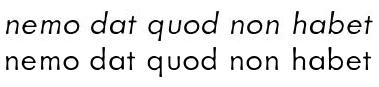
I'm a big fan of hot-metal typography, as my stack of Ludlow typeface books will attest. So it is with great pleasure that I can recommend Mark Simonson's Metallophile Sp 8 font. Veer describes it as a . . ."re-creation of a sans serif face set on a 1940s-vintage hot metal typesetting machine. Designed to look great at 8 points, where line weights start to disintegrate."

It comes in two faces (regular and italics) for USD $39. Download the regular and italic type specimens, or go buy it at Veer.

Friday, October 13, 2006

fatigue: fighting through

Its been a very busy few weeks in the land of ack/nak. A week ago this last Monday, storms-a-plenty swept through the Chicago area, dumping multiple inches of rain, knocking down trees and knocking out the power.

Dear reader, this is a combination designed to create misery, and misery visited our home in the form of two inches of water in our basement. Yes, we had a back-up battery for our sump pump. No, it did not function correctly, as the contact had corroded over time leaving the sump pump deliciously free of power. At exactly the wrong time, no less.

When the power came back on, we scrambled to move dry boxes to higher ground, wet-dry vacuumed as much water as I could get to, and the next day cleaned the concrete floors with a powerwasher and bleach (as the water that made its way in was dirty, naturally).

Two dehumidifiers were installed and have been running for almost two weeks now; the ambient humidity is now down to under 50%, but for days I was pulling multiple gallons of water out them. Concrete, you see, is actually a sponge.

No carpet of any value was destroyed, but a fragment downstairs that the kids had used to play on in the cold weather was pulled up and cut down into 4' x 4' squares for disposal. Approximately 100 pounds of sodden cardboard, and multiple bags of sodden books were dumped at the curb. An old tower computer that got its feet wet was relieved of its hard drive also met its fate.

Last weekend we visited Ikea and made an investment in bookshelves - about 100 square feet of BILLY shelving now lives in an upstairs closet, into which I've been moving boxes of (dry) books, (dry) boardgames, (dry) magazines and other (dry) oddments I've been carrying around with me for years. All of which were spared from the flood, thank G-d.

In the course of the last two weeks, I've lost sleep, caught a sinus infection, and saw my waist size shrink by two inches from the insane amount of stair work I've been doing.

And now I'm dead tired - and getting ready for a whole week of our annual conference in California.

If you have hints on how to fight through fatigue, let me know. I need the help.

BTW - I replaced the sump battery, a frightening exercise involving dispensing battery acid. Needless to say, I now vow to never let my sump pump backup battery fail Every Again.

Monday, October 02, 2006

communication: documenting your touchpoints


The principle is simple - if you want your people to use the same lines, follow the same protocols, you have to write them down.


This manifests in a number of ways, the simplest being the call scripts used in the call center. Once you break through the IVR that front-ends it, that is.

"I'm sorry you're having problems with your car today," is what the roadside assistance operator always says right after I explain what sort of mess I've gotten myself into. Always. "Welcome to Mr. Meaty, would you like to try our super colossal suet melt?" is always what you hear when you roll up into a drive-through. Or some reasonable approximation thereof.

The bottom line is that we all understand how call center interactions are scripted. The point I'm trying (poorly) to make is that all of your customer touchpoints should be as rigorously documented and measured as the call center.

Here's an exercise. Off the top of your head, name all of the ways in which your company regularly communicates with your customers, the goal of each of those touchpoints, and how these touchpoints reinforce each other around a set of key messages.

Odds are you can't, and that's fine. You may say "that's marketing's job", and I'd be obliged to disagree. It's the job of the business - at the highest of levels - to ensure that it communicates consistently and effectively.

The other night we made meatloaf, mashed potatos and veg for dinner and my son asked "where's the gravy?" My wife responded "gravy doesn't just happen" - a much kinder response than the one I had planned, but definitely a better one.

Good communication "doesn't just happen". Unless you document how you communicate with your customers/market/staff, and measure how effective you are in each touchpoint, you can't guarantee consistency. If you're inconsistent, you're not effective, QED.

In Snowcrash, Neal Stephenson has this to say about franchises, and by association, communication:
The franchise and the virus work on the same principle: what thrives in one place will thrive in another. You just have to find a sufficiently virulent business plan, condense it into a three-ring binder -- its DNA -- xerox it, and embed it in the fertile lining of a well-traveled highway, preferably one with a left-turn lane. Then the growth will expand until it runs up against its property lines.