Sunday, April 30, 2006

tchotchkes: best ever

Francois over at Emergence Marketing wrote Friday about the dumbest trade show tchotcke (sic) ever. Sorry Francois, that's not the worst ever.

Tchotchkes (also tsatskes) are the knickknacks, geegaws, trinkets and baubles that we give away at tradeshows and other events to the smiling masses, thus one of their names - "swag" - for "stuff we all get".

In the late 80s as a pharmaceutical rep I gave away such incredible swag as vinyl facsimiles of human brain stems (for Dilantin) and matched sets of steak knives (for Loestrin, G-d help me). I've handed out more t-shirts, pens, mugs (ceramic and metal), sticky notepads and notepad covers than I can count.

But the best tchotchke ever - bar none - that I've ever had the honor to have pass through my hands is one that we're giving away in May at a few special events. The unit that I've been "testing" for the last week has me convinced.

And no, we won't be giving them away through Valleyschwag.

What I like best about this is that we're using it as part of a campaign - it's a true advertising tool and not random crap to shovel into the garbage.

Like the worst tchotchke ever - grippy-style hand strengtheners with grips in the shape of huge pills - for a chlamydia drug. Ouch.

poe: alone


From childhood's hour I have not been
As others were -- I have not seen
As others saw -- I could not bring
My passions from a common spring --
From the same source I have not taken
My sorrow -- I could not awaken
My heart to joy at the same tone --
And all I lov'd -- I lov'd alone --
Then -- in my childhood -- in the dawn
Of a most stormy life -- was drawn
From ev'ry depth of good and ill
The mystery which binds me still --
From the torrent, or the fountain --
From the red cliff of the mountain --
From the sun that 'round me roll'd
In its autumn tint of gold --
From the lightning in the sky
As it pass'd me flying by --
From the thunder, and the storm --
And the cloud that took the form
(When the rest of Heaven was blue)
Of a demon in my view.

Alone
Edgar Allan Poe [circa 1829]
from The Unabridged Edgar Allan Poe
(Running Press, 1983)

Friday, April 28, 2006

tools: the programs brief

At some point in the go-to-market process you need to explain yourself to individuals who haven't been as intimiately involved in the "act of creation" as you've been. These individuals are experts at arcane crafts such as "demand generation" and "copywriting" and "event planning", crafts you don't need (or want) to master yourself.

These individuals haven't eaten and slept "your project" for the last six months. They can't read your mind. They know little to nothing about the subtle glory of your #1 feature, or why you decided to build the darned thing in the first place.

You need to tell them, in a concise way, exactly what is compelling about your release. You need. . .to write it down for them. Seems pretty basic, but it's easy to miss.

Every organization has some version of what I'll call "the programs brief". It's a document that breaks down what your unique value proposition is, who you're targeting, how you want to measure success, and some compelling business justification for the above.

Even late on a Friday night, a few drinks past dinner, my mind is still twitching from the exercise of writing one this week in collaboration with my lead marcom director. To her credit, she asked the right questions, didn't settle for glib answers, and insisted on coming to closure on the quantitiative measures that we'd use to track success.

Having gone through that exercise, I now know that everyone who reads it will be using the same "value vocabulary" that the customer needs to hear. Whether I am right or wrong, at least we will be consistent. And consistency is the core requirement of campaign management. Without it, any metrics we create can't be trusted, and any attempt we make at implementing an integrated campaign will fall flat on its ass.

Whatever the format you use, make sure to capture the current and desired rational mindset of your ideal prospect at the very end of the brief. If you've done a good job of documenting why the features matter from a business perspective, you'll have left marcom the facts they need.

If they don't, they will either a) do nothing b) do something wrong. Pray for A. Better yet, write the programs brief.

Thursday, April 27, 2006

discovery: an indestructible rose


I know of a few good bets. Betting wrong in craps is one of them. The Knock Out Rose is another. Gathering as many campaign metrics as possible is a third, but I'll pass on that one for tonight.

Here in Chicagoland the summers are brutal, humid, and pestilential. Wary of such dangerous-sounding maledictions as Black Spot, Powdery Mildew, Botrytis Blight, Brown Canker and Orange Space Crabs, we were on the lookout for some sort of rose that could stand up to a beating and bloom away in the face of death.

An itinerant landscaper turned us on to The Knock Out Rose. This shrub rose is well-neigh indestructible, growing quickly and blooming repeatedly with dozens of small, self-cleaning blooms from late spring through to the first frost - and beyond. Each plant grew out to about four feet tall and a four-to-five foot diameter.

(SET PROFESSOR_FARNSWORTH_VOICE=ON) Good news everyone! The rocket scientist breeders who whipped up this freakishly sturdy plant have conspired to breed another winner that's available in volume this spring - the Double Knock Out. On the plus side, this baby delivers double-flowered blooms on a plant that is slightly smaller than the Knock Out. It should stand up as well to misery as its cousin, which I look forward to testing when they arrive at our local nursery later in the spring. On the down side, it has been known to abuse diuretics.

(Note: The picture above is of the Double Knock Out, BTW)

I know ChrisT is a gardener, and based on the stats around some of my other gardening posts, a number of the rest of you are as well. While I'm as big of a fan of hybrid tea and floribunda roses as the next guy, I prefer living plants that don't look like they've been struck down with the plague. Ergo, the Knock Out. Enjoy.

Wednesday, April 26, 2006

wondering: the googled you

T-ShirtHumor.com

"Dis-moi ce que tu manges, je te dirai ce que tu es."
[Tell me what you eat and I will tell you what you are].
--- Anthelme Brillat-Savarin

"Tell me what I get when I google you, and I'll tell you who you are."
--- An entire generation of women.

gear: belstaff colonial canvas collection (expanded)

Everyone needs a good bag. Thankfully, after years of searching and failed attempts, I finally found mine. The good news for all of you is that the folks at Belstaff, recognizing that not everyone wants a big old bag, has introduced a number of new items in their Colonial Canvas collection. Sorry, I can't link directly to it since the "new" Belstaff site is all Flash. But I can get you started. Follow the Accessories > Bags and Backpacks > Colonial trail and you'll find this bag and a number of its new friends. Cool.

Tuesday, April 25, 2006

mantra: postmodern marketing

Readers of ack/nak have no doubt been wondering when I'd get around to explaining what postmodern marketing is. Well, you and me both. I've been quietly dreading the day when I'd have to tell you why it's so important to me and my craft. Because it's a secret.


I'll avoid quoting the great minds of the movement, notably Stephen Brown, who has conveniently written not one (Postmodern Markteing) but two (Postmodern Marketing Two: Telling Tales) books on the topic. And a perfectly marvelous essay you can download and read right now.

I'll also try not to use the word phenominological more than once. Damn, that counted, didn't it.

Nor will I say anything about Bataille, Deleuze, Derrida, and Baudrillard, because none of them could sell their way out of a burning house with a bagful of halon. That and Wired already did quite a nice job of running them down for the modern short-attention-span reader.

Len Ellis is, however, fair game. Most of what he's written - or at least, what I've been able to find - is an obfuscatory fog that reads like it was generated by a program, but he scored points with me when he (or his article creation program) wrote:

Internet workers make their own contributions to this phenomenological marketing approach. Every reader knows the term "user experience" and its referent -- the relationship between human and machine software is designed to create and enable, whether in a browser, game machine, or kiosk. Some may know "flow" -- the state of psychophysiological well-being when one is engaged in self-controlled, goal-related, meaningful activity. Achieving flow is the mission of software design, especially but not exclusively game design. A few may know about "pattern design" -- a concept borrowed from architectural theory that posits a universal set of spatial experiences. A "cozy spot," a "sunny spot," -- hundreds of patterns articulate their distinctive human-spatial relationship. User experience, flow, and pattern design are among several concepts with which interactive designers try to grasp and shape the subjective dimension of human-machine interaction.

Wow! I'd have paid cash for that paragraph. Or for the program that wrote it. But I digress.

Programmers - at least the good ones - are all about flow. No surprise that the software industry treasures flow as one of its core values. It is the shared experience of those who give life to the entire movement. Those of us who don't breathe life into the code itself nonetheless live and work in their ex nihilo world, and golly, we like it.

Especially product marketing folks. Unfettered by the limitations of the real, we operate in a world of potential, exploiting the patterns of relationships we create with our colleagues, our customers, our competitors. Especially our customers. In a moment of lucidity Len described this when he wrote:
Today, we're prodded to leap into an age in which branded value is created by and emerges from staging and cocreating customer experiences.

Postmodern software marketers create reality through a special co-creating relationship with our customers. They imagine with us, and back at the shop, our ex nihilo philosopher kings make the dream real. Or at least, they progressively approximate the dream.

Then our customers tell us when we've got it right, or how to get it right. Because software consumers understand the fact that software is made out of dreams and inspiration through an iterative, collaborative process. They are themselves music-makers and dreamers of dreams, the same as the creators. When it comes to software, everyone creates - customers a little more slowly than programmers. Ergo the allure of shared-source - everyone gets to enjoy the flow.

Traditional marketing types froth at the mouth and run jibbering into the marsh when faced with the indeterminancy of the software "product" and the co-creator status of the software "consumer". Which is why good software marketing is, by nature, postmodern, and which explains why there is so little good software marketing. Because embracing the postmodern mind-set is hard. And, on the surface, a little flaky.

Here's the irony - if you're in the software business and you grok the postmodern mindset, odds are you're a programmer, becuase it's all about flow. If you don't grok the mindset, odds are you're a business type who understands the traditional (non-postmodern) mindset. This explains why most software marketing is out-of-touch with the essential wa of software.

Why have I kept this a secret? Postmodern software marketing principles help me to understand the secret heart of the (software) creator, both programmer and customer. That and it's hard to describe to anyone who hasn't experienced it for themselves.

Stephen Brown put it nicely when he wrote "the postmodern eschews straightforward explanations." This is why I started ack/nak - to try and explain it, over time. Poorly, no doubt, but hey, the honor is in the attempt.

(art credit: Now by Ed Ruscha)

Monday, April 24, 2006

loyalty: how to build your blog's circulation

There are no magical blogroll swap schemes or super-influential directories to sign up for that will drive traffic to your blog day after day.

There are no "optimal" layouts, or for that matter, "best" authoring tools.

There are no guaranteed paths to riches.

There are, in short, no secrets or short-cuts.

To build an audience for your writing, you must do the following and be prepared to live through the months and months (or more) it takes for word of your writing to find its audience - whether that is 50, 1000 or a million readers:

Write honestly and frequently.

Write in your own voice.

Expect nothing in return.

Value the time that each and every one of your readers devotes to your writing, however often they visit. Keeping this in mind will carry you through the dry spells when words fail you, motivation eludes you, and the temptation to cave in to your baser natures whispers to you.

Keep score. Use Feedburner, Performancing and Technorati to stay on top of your metrics. The act of tracking your readership is, for you, a conscious act of self-discovery worth embracing.

Accept that there is only one Boing Boing, only one Scobilizer, only one Guy-san. You can't be them. Just be yourself.

Sunday, April 23, 2006

crisper: six story summaries


He finds that the front door into his house no longer leads into his living room, but rather into a frozen tundra peopled by an alien, insectoid race.

She runs over a small creature late at night on a deserted highway. The creature turns out to be a leprechaun.

An old man gives them a locked box which, when shaken, sounds to be full of metal. He tells them that the key to unlocking the box is, literally, in the heart of a retarded child they are taking care of.

He burns himself with a butane torch one afternoon and discovers a layer of metal plating under his skin.

She opens a frozen dinner and finds that, inside, there is a face.

Their yacht is besieged by some kind of intrusive non-human life form that swarms and drinks blood.

Dan Curtis Johnson
talk.bizarre (circa 1992)
writings: archives current

travel: new york times "affordable europe"

The New York Times published a series of travel articles today under the title "Affordable Europe". As a courtesy to ack/nak readers, here is the index to the series:

tenet: edit before you write


Brevity used to be enforced mechanically - it took time to write letters by hand, to set type for a newspaper, to make copies (I still have flashbacks of nasty rotary mimeographs fumes) and to prepare "slides" for presentations.


The requirement to "get it right" before you went to press imposed by the printing media of the day placed a premium on the craft of editing. As the velocity of publishing has increased the craft of editing has experienced an inversely proportional decline; whether this is indicative of superior writing is doubtful.

By editing I mean more than the final stage of document preparation in which you check for spelling, capitalization, grammar, etc. It's more than proofreading. The editor is the conscience of the writer, whether the editor is a third party or a reflective aspect of the writer him/herself.

My point is that editing as a craft used to be embedded in the mechanics of the publishing media; now it is external to the media. In all aspects of writing, but especially market-targeted writing, it needs to be an integral part of the creative process. Especially for the software space, where hyperbole and lazy superfluousness is rewarded with. . .crickets.

(Here is the edited version of this entire post: Think about what you're going to write before you sit down to write it.)

Saturday, April 22, 2006

gear: rhodia pads


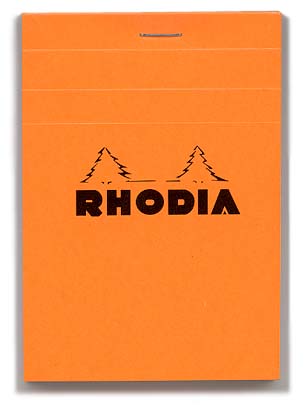
It's the post-modern PDA - portable, inexpensive, with a high-contrast interface to die for. Rhodia pads were first made by the Verilhac Paper Mills back in 1932, and are now manufactured by Clairefontaine, located in the Vosges region of France. They are the simply the finest quadrille graph paper notepads made today.


I've been using them since the late 70s, and they are as good today as they were then. They are available in all manner of sizes, but I recommend the number 11 pad (7.4 x 10.5 cm / 2.9 x 4.1 in) for incidental on-the-fly note taking & note giving. You can buy them online and at better art supply and stationery stores. The #11 goes for about $1.80.

Friday, April 21, 2006

planning: the bones of your garden

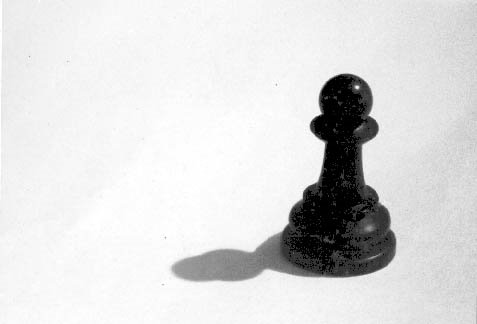
Every product casts a shadow in the market; whether it is a long or a short shadow depends, to some extent, on how much light you shine on it. By light I mean not money, but time. You can't just throw money at marketing - you need to invest time in making sure you are reaching your touchpoints in the right way, at the right frequency, and in the right mix. It takes planning, and structure, and a committment to keep at it.

We had this in mind when we built our garden last summer and when we planted bulbs in the fall; now we're seeing the results of our "mix" under "real-life market conditions" - that is, spring.

In effect, we're beginning to see the "bones" of our garden - the gross structure of each element around which we can start implementing more focused plans. When you're dealing with acres and acres the superstructure of a garden is manifestly obvious, and you can make bold decisions in discrete areas with little worry of how those decisions will impact other "zones" of the garden.

In our small space, with our limited resources and unknown limitations (soil quality, rainfall, available time to prune & weed, hardiness of specimens for zone 5), planning these bones was a non-trivial exercise. Even now, we're seeing things we want to change. But we wouldn't have enjoyed spring (or summer) in our garden if we hadn't done the planning around the bones.

If I think about my market planning using the same thinking I used last fall for the garden, I find myself faced with numerous parallels; limited resources, unknown limitations, and a strong sense of urgency. The last is was/is the most dangerous.

Urgency can lead you to just "do something" - to plop in a few non-descript yews and boxwood and other evergreens along the foundation and call it a day. Our approach to dealing with the tyrrany of the clock was to carve off a piece of the garden for this year - namely our March to May segment - and commit to leaning from this and doing May through August next year.

So now we experiment - we pull up the weeds, figure out why we failed, and plant again after fixing what we can. Someone told us that only fools plant an entire garden all at once - best instead to lay down the bones of the garden first, then adapt to what nature gives them.

Becuase not all plants will thrive in a given patch of soil with a given amount of sunshine and rainfall, the same way that not all messaging/packaging/pricing will play to any given target audience.

segment: "IT is/is not a competitive asset"

We've been segmenting like mad lately - mostly on revenue - but here's a quick thought before they close the cabin door:

"How do you sell/package/price to a company that doesn't consider their IT department to be a competitive asset?"

The reason I ask is because I think this might be the "line of demarcation" between those who prefer to buy software vs those who would prefer to consume it like a utility.

I wonder how this shakes out by industy vertical too...

More another day.

Wednesday, April 19, 2006

26: reasons not to start a software marketing blog

As a public service I offer 26 "reasons" why where are so few blogs on the topic of software marketing, and by association, why you should not consider starting one.

(SET TONGUE_IN_CHEEK=ON)

A) Because corporate blogs operated by marketing shills are useless, un-authentic, self-serving and controversy-free. All of which translate into no readers.

B) Because blog consumers are technical, and feel that reading anything associated with both the words "software" and "marketing" will give them the clap, or worse, ruin their programmer street-cred.

C) Because the discipline of software marketing is poorly understood, poorly practiced, and even more poorly valued, which means there are few people to write about it.

D) Because software marketing is in its infancy, which means there's not much to write about.

E) Because product managers don't like to think of themselves as being in "marketing", since that would wreck their credibility with their programmers.

F) Because we decided in advance to keep our lore as a tightly-held secret, and pledged to seek out and kill anyone who violated this sacred trust.

G) Because it's just not all that interesting.

H) Because writing Google, Yahoo and Microsoft rants day after day gets boring.

I) Because software marketers are too damn busy trying to avoid getting fired.

J) Because it's the simplest marketing in the world - name your product after what the produt does, take out ads in the trade rags, launch a clean website, and voila, marketing. What's there to write about? Look at the Oracle ads for chrissakes.

K) Because the programmers write what they damn well please, not what customers want, which marginalizes the role of marketing.

L) Because all you need is demand generation to keep the lights on, which isn't "real" marketing.

M) Because no one really knows how people use software, which means that product marketing based on consumer preference doesn't exist in the software business like it does in every other industry.

N) Because product marketing people are shy.

O) Because marketing people don't bother to understand the product, which disqualifies them from speaking to customers - which eliminates their credibility.

P) Because buzz-words are transparently bad.

Q) Because the folks who run software companies are either software geeks who don't value marketing, or financial types who don't trust the metrics used by marketing to justify their budgets.

R) Because the software industry has not "industrialized" it's manufacturing processes, and therefore can't exploit market intelligence in a timely manner, which crushes the range of marketing activities possible.

S) Because software marketing bloggers think they have to write dissertations every time, and it's hard to keep that up over months with no comments to reward you.

T) Because sooner or later all marketing people realize they're just spouting nonsense, by gum, and they run off and become sheep wranglers.

U) Because why blog when you can write collateral? Woo hoo! More fact sheets!

V) Because they have to clear eveyrthing they write with legal, their managers, and their peers, lest they embarass themselves by making a bold statement that doesn't "hold water".

W) Because they refuse to expose their ground-breaking, proprietary ultra-smart creative brain spasms to their rapacious competitors who are definitely going to read their blog and steal their ideas!

X) Because they are spending too much time on planes, in parties, and at conferences to bother.

Y) Because they are tired of getting flamed in their comments, and they don't dare moderate their comments because they'll be flamed as a "censor", and we all know censors suck.

Z) Because after a while it stops being fun.

(SET TONGUE_IN_CHEEK=OFF)

Honestly, though, we need more product marketing blogs. Or maybe I just need to write more.
Tuesday, April 18, 2006

article: SAP and the future of software (plus commentary)

In an article titled SAP and the Future of Software published today, authors Dawn Kawamoto and Dan Farber of CNET News.com sum up their interview with SAP chief executive Henning Kagermann as follows:

The emergence of on-demand is apparently not the death knell for traditional licensing agreements.

And what did Kagerman say to justify this conclusion?

Consider this exhange (my italics):
Kawamoto/Farber: Nonetheless, all this talk of on-demand seems to be bringing a sea change to the way customers want to pay for their software. They either want to pay it as they use it or at the end. Where do you think licensing models are going?

Kagerman: It will be very stable in the years to come.

We have had this debate for the last four years: Should the licence model be different? Should everything be on-demand?

But I have spoken to many clients and they want to own [the software]. They are happy with this model. So, therefore, there will be some additional new profit models, that is true, but the core will still want to license. You can ask me again in one or two years from now.
OK, interesting. Then the authors try to come in for the kill:
Kawamoto/Farber: Back to on-demand and licensing — some customers complained about spending hundreds of millions of dollars on SAP and feeling not much closer to wrapping up its installation and implementation. Some talked about the lure of an SOA and XML and keeping their investment in SAP, but any future investments will be done with point solutions. What do you say to these types of customers?

Kagerman: I have not met such a customer. But if I met such a customer, I would tell him that over time he will spend more money because it's very difficult to manage such a heterogeneous environment of point solutions — even if it's on top of an open platform.

I would expect that the customer will try to check and test the flexibility of SOAs and bring point solutions in, but, nevertheless, he has the maintenance and managing of different suppliers, etc.

So the heart of the SAP argument is that owning your application software is preferable to using a collection of point-solutions you assemble on some sort of platform (AppExchange comes to mind). SAP will make some net new dollars (euros) off of this on-demand stuff, but it won't impact their core business.

This is the battle line in the traditional software market vs the emerging software-as-a-service (SaaS) market. Are you prepared to run your business on someone else's hardware? And even if you are, are you prepared to live with the limitations this will place on how far you can extend and integrate those solutions with the rest of your back office?

Kagerman, I think consciously, shines a light on the holy war going on right now between the SaaS multi-tenant advocates and those vendors (ASP throwbacks?) who cater to enterprises demanding single-tenant control. In an interview with Computerworld, one of the multi-tenant purists, John Girard, CEO of Clickability, had this to say:

"Hosting their installed apps in a managed server farm does not an SaaS offering make," Girard says, referring to the recent efforts of conventional software vendors. "We throw a party whenever an installed competitor announces a hosted offering. It validates the SaaS model and spells operational disaster for the competitor."

I can see why folks like Girard, Salesforce.com's Marc Benioff and others are insisting on multitenancy. It's the only way they're going to make money on SaaS applications in the long run. Just look at the economics of it - single-tenant solutions mean everyone has their own database, their own server code and custom extensions. And don't forget the custom SLA. The cost benefits associated with the SaaS model evaporate quickly once the provider starts adding up the bill for all of this special treatment.

And the folks who opt for single-tenant solutions know this - except now they've got the worst of both worlds: all of the cost and risk associated with maintaining a customers infrastructure, and none of the scalability associated with multitenancy or traditional licensed software. "But we closed the deal," they'd argue. "Are you in business to execute on a strategy or to close that deal?" I'd argue back, then I'd head for the bar.

Ultimately, there's a limit to the degree of customization that a SaaS provider can permit in a multitenancy setting. This is, I think, what Kagerman is referring to when he says that customers want to own their software. That and they don't want to risk their business on someone else's IT department.

In the meantime, SaaS vendors serving the SMB are gobbling up venture dollars to support the huge infrastructure investments they need to make to run big multi-tenant operations (with three-nine or better SLAs) that are needed to support the business model. Remind you of another time when the VCs were making bets on the come?

Kagerman, like other old-school packaged software providers, can wait for the implosion. With too many providers offering solutions in the same space, SaaS profit margins will ultimately evaporate in a frenzy of price-cutting, and customers will start to experience the outages that come from the resultant cost-cutting. Add in a few disasterous mash-up incompatibilities, and the traditional software licensing model will start to look a lot more attractive.

The gentleman from SAP had it right when he said to ask him again in one or two years from now. Things should be a lot clearer by then. If only we didn't have to live through these next two years to find out.

Monday, April 17, 2006

lesson: teach someone how to play a game


Anyone who would create and market software should be required to teach someone how to play a game.


Not some dusty classic like Go or Backgammon or Chess. Or Jarts. I'm talking a modern board game. Something like Settlers of Catan. Or Devil Bunny Needs a Ham.

For those of you who are not familiar with the world of modern board games, go to Funagain Games and have a look around. Select any old game you see. Carcassonne is a good one, and pretty much guaranteed to show up on their front page.

Whatever game you select, scroll down. . . down. . . until you get to the reviews.

What you'll find are thoughtful, exhaustive, and generally entirely fair reviews of each of the games. Keep your eyes out for how reviewers describe the rules of each game - and what impact these rules have on something called "playability". But mostly I want you to read until you find an excellent review - one that attempts to not only say "what's good" and "what's not good", but one that gives you some insight into how to play.

Now think about the best games you've ever played - what they have in common are rules that are generally well-written, understandable and internally consistent. Even if they weren't, if you really liked to play, someone somewhere taught you. Remember that - now try to explain the rules of a game you know really well to someone who doesn't know those rules.

Think about where you start - at the beginning. What is the objective of the game? How many players? What are the pieces? What does the board look like? How do the different players interact?

But even before you get into all of that, before you said word one about the rules, you'd tell your listener that it was a "great game" that's "a lot of fun" or "very challenging" - and your enthusiasm would set the tone for the rules discussion to follow. Because honestly, who teaches someone to play a crappy game that's no fun?

If you were really smart, you'd have the game there - you'd lay it out, and show the pieces as you went along. You wouldn't go right into the "advanced rules", but you'd explain the basics.

I've done my share of teaching people how to play games, whether we're talking Cosmic Encouter, Carabande, Nuclear War (really) or something simple like Boggle and LCR. Each time, I've learned something new.

When you teach someone to play a game you cover all the important structural points that should go into good software, and good software marketing.
  • You start with why it's good, and why someone should be interested in playing.
  • You describe it's objective, and a basic idea about how to achieve that objective.
  • You start with basic rules, and make sure you're understood before you move on.
  • You add rules until you've described enough of them that the listener can play.
  • You give examples.
  • You add complexity as it is needed, but not at the expense of the basic game.
Then when it all makes sense, you start to play.

Good software should be clear, accessible, compelling and offer an objective worth playing for. A lot like a good game.

(In addition to web stores like Funagain and Boulder Games, you can discover some great games at manufacturer's sites like Cheapass Games, Steve Jackson Games, Mayfair Games, WizKids Games, Jolly Games, Flying Buffalo Games, Looney Labs and GMT Games. Then there are all the card games, and the miniature games, and don't forget the RPGs. . . and MMORPGs. . . then there's Cosmic Wimpout. And RoboRally. . .)

Sunday, April 16, 2006

howell: the cardinal in venice


No one knew
the cardinal had been in love
and walked naked
in his five senses
while the Lion of St. Mark
nosing into the Venetian watery winter winds
purported not
to notice

it was because of Lespintina de Ossio
eighteen, whose wide grey eyes
he'd seen, as if in dream
and whose confession
had been handed up to him
by several chalk hands
with black cuffs

her sin?
it seemed to him (for so it had been reported)
she thought the devil more sincere in his evil
than those pretending good who
shunned the dear gifts and wounds of Christ

had He himself not suffered
children, publicans, and
the hot-splayed Magdalen
and those whose peccancies
were sharp, small, yet secret
all in the name of
circumstantial love?

the cardinal froze for his portrait
that we know
but there was a tenderness withal
hidden in one limp finger
a little pardon
because of his own needs
had not her youthful and simple logic
undone him in his scarlet chambers
there where he had sighed
with such regrets
his prayerstool prefiguring

his certain catafalque

which she surely would have wept to see the lace of
had the plague not carried her off
at twenty.

The Cardinal in Venice
by Alice O. Howell

photo: San Marco Square. 4AM by Luke Harby

Saturday, April 15, 2006

sameness: google calendar

Why do I get the feeling I've seen this before?

Because I use Outlook everyday at work. Because I have a Filofax Personal datebook. Because I've used 30 boxes. Because my real estate agent sends me a calendar each year.

With all respect to Google Earth, I'd like to see the world-class collection of smart programmers who've congregated at Google spend their time doing something original. The world doesn't need a better calendar. It needs a better [blank]. Instead of making a better calendar, do [blank]. I almost don't care what [blank] is - just that I don't already have ten different ways of doing [blank] equally well.

I expect more from leaders than to see them follow over and over again. There is nothing novel about a better mousetrap. Make a better mouse.

brands: for an alternative future

Product naming is a black art - "art" because there is no reliable way to create a guaranteed outcome, and "black" because it scares me.

There are plenty of people who will tell you how important a good name is - Igor tells us:
Great names are a powerful force in the branding, marketing and advertising campaigns of the companies they work for. They differentiate you from competitors, make an emotional connection with your audience, and help to build a brand that ignites the passions of your customers.

Aaaaah! Too much pressure!

So to take some of the angst out of my current naming woes, I gave myself the following challenge: imagine some computer brands for an alternative future. Branding for "someday" freed me from worrying about "what is" and woke up my ability to imagine "what could be".

The only other requirement was that each of the names should "belong" to the class of solution in some obvious way.

For your enjoyment, here's what I came up with. I see some good stories in there.

CORES - vast, sprawling, baroque, maintained by cadres of specialists, expensive, powerful
  • Boberg Ironwerks
  • Pandaemonia
  • Perch/Prism
  • DagMat GMBH

CLONE - commodites, high-velocity consumer stuff, cheap
  • TinkerTek
  • GNDM
  • CMD (Chiba Mechanical Designs, jokingly referred to as "Chotto Matte Dozo")
  • ACKme Labs

LEGACY - yesterday's iron slung together with patches and gum, less expensive than CORES
  • @ICO Salvage
  • Blinckenlicht

IMPLANTS (a.k.a. "IMPS") - human/machine interfaces, commodity, blue-collar
  • Augmento
  • Xenocraft

EDGE - experimental, dangerous, proscribed, fashionable, undocumented
  • Aleph
  • Susurrus
  • Gedanken
  • Koji Boomwerks

NANO - very dangerous, military, Turing test, associated with robotics research
  • Spore
  • PhageX
  • dMinimus
  • Reductam AI ("ad infinitum")

Friday, April 14, 2006

art: high dynamic range photography


I test art on my wife by splashing it up as the wallpaper on our home computer. If her reaction to the image above is any indication, this is something very special.

Yes, I know this particular site is making the rounds through the blogosphere today - so sue me for climbing on the bandwagon. Not since Olivio Barbieri's tilt-shift lens technique stunned me have I found myself staring at a series of pictures with such fascination.

I'm going to go find a photo lab who can print this shot up for me. It's simply beautiful, revealing itself more with every viewing. Well done.

(Speaking of Olivio Barbieri, the artist responsible for the shot above also did some tilt-shift lens shots that can be enjoyed here. This is other-side-of-the-looking-glass stuff, kids, that you need to see to believe.)

shift: the power of software usage analysis

I've given two speeches on this topic in the last two weeks, and I can't stop thinking about it.

You can argue that the reason all of us software producer types are in a lather over "software as a service" (SaaS) is because we think customers prefer it over packaged software. The economics are incredible - but whether anyone other than salesforce.com can make any money doing it remains to be seen.

But what has me all in a lather is what this shift will enable in the area of usage analysis, which I maintain is the product marketer's Grail.

With few exceptions, packaged software isn't able to provide the publisher with anonymous data regarding how it is used. So those of us who have to figure out what to build next, what to promote, what to position, etc do so with little to no objective data around whether what we've built/promoted/positioned worked or not.

Compare this to what the web crowd has had from day one - rich, comprehensive and immediate feedback on how content is used, by whom, for how long, and how often.

When the buzzword was "sticky", as in making pages more sticky, web analytics were king. With today's SaaS meme in high gear, analytics are back with a vengeance.

Closing the loop between manufacturing, distribution and customers requires some information on how they use the product. This information should be used to guide development, support, marketing- frankly, just about everything the publisher does.

Now instead of page views, imagine you had bear-realtime access to a complete picture of how your customers value your product. What would you do with this data?

I could do a lot with that sort of information.

Anyhow - both at SW2006 and SLAM, my payoff slide had three points I wanted to make to the packaged software producers in the crowd who were starting to make the shift from physical to digital distribution. My thesis was that by putting these three points into their roadmap, they could get ready for the shift in a non-disruptive way.

  1. Customer care comes first. Digital distribution will mean customers can get access to your new hotness nearly as soon as you've done shoving it through QA. If you can't support the uptick in support that comes with this, don't start. A bad customer experience is death.
  2. Put usage analytics at the heart of your business. I believe you need to measure everything associated with how customers use your products. Not just how often and for how long, but what modules they use, the navigation paths, even how they use help. When everything starts to move really fast, your only friend is your metrics, so be prepared for the flood of data and plan for how you'll use it. The day someone asks you "what was the impact of that marketing campaign" you'll be able to answer them definitively.
  3. Embrace new opportunities for pricing and packaging your solution - and test, test, test. If you accept from day one that your product's pricing and packaging will change - in profound ways - you build your products from day one with this in mind. This gives you the flexibility to try out new things, see how they work, without crushing your development organization. It also puts marketing in the spotlight, since they should be the ones coming to the table with fresh ideas for serving customers better.

These three things build on each other - but usage analytics are the most critical. They make your work in support more focused and effective, and they do the same for your pricing and packaging decisions. Without usage data, you're flying blind.

Reliable, comprehensive usage data is not something that packaged software vendors have ever enjoyed in great numbers. Putting all of the hype and customer buzz around SaaS aside, I think once producers figure out that digital distribution gives them this data by default, they'll realize the competitive advantage it gives the SaaS crowd, and look for ways to get the same advantage.

In the meantime, as the SaaS space continues to mature, smart publishers of packaged software should:

  1. Start to implement technologies for gathering usage data around their packaged software and actually use it to drive development/sales/marketing/support decisions
  2. Implement ways to flexibly price and package their solutions independent of the development cycle
  3. Make sure their support organizations are prepared for when the usage flood comes

Thursday, April 13, 2006

bacon: buying feature or usage feature?


Mars Incorporated, fine purveyor of human and animal snack foods, parboiled rice, coffee machines and coin sensing technologies, has just launched a new product called Schmackos™.


Say it with me a few times. Schmackos™. Now remember your Yiddish and say it again. It's even funnier that way. But I digress.

Now let's look at the product. It's a perfect example of two principles:

1. Pet owners treat their pets like people.
2. There is a difference between buying features and usage features.

The Schmackos™ TV spot features a claymation dog that climbs up to the roof to avoid getting a bath. We learn from the website that the dog's name is Roger (get it?), that Roger was born in "Bacon Hill, New York" (ho ho!) is "just old enough to know that fake bacon is not his friend" and that Roger dreams about "Smoked Bacon" and "Cured Bacon".

Having established that Roger Likes Bacon, the viewer is not surprised when Roger declines his owner's bribe of a "fake bacon treat".

Rather than bring the dog down with a few shots from her handy twelve gauge, Roger's owner breaks out the good stuff. The Schmackos™. And voila, Roger responds with a joyful triple flip worthy of Greg Louganis as he dives into the bath tub and claims his Schmacko™ with a smile!

The message: Your dog knows the difference between real and fake bacon treats, and will make your life a living hell unless you deliver real bacon treats.

The reality: Dogs will eat just about anything. I had a dog that could eat an entire container of TinkerToys in under a day. A dog will gnaw on a dessicated pig's ear, the femur of an ungulate or your favorite pair of Timberlands and feel pretty good about life.

It's classic pet food marketing, a marketing discipline in a class all its own. The pinnacle of the pet food marketer's art is cat food. . . and Mars knows cat food. They're the people who bring you the Pedigree™, Cesar™, Whiskas™, Sheba™ and Kitekat™ brands. You've seen the ads - the ones that feature a pampered-looking uber cat eating moist ur-food from a crystal dish with a look of barely-disguised entitlement. Mmmm, tasty.

(Side note: I am not a cat person.)

What you and I can learn from this is the difference between buying features and usage features.

The user in this case doesn't care if there's real bacon in there. In fact, the user would be happy gnawing on any part of the pig.

But the buyer does care. The buyer cares deeply - deeply- about the experience of the user. Given that the buyer does not (and often cannot) truly know the mind of the user, the buyer projects his wants and desires onto the user. In this case, if the buyer loves bacon (and who doesn't, frankly) then the user must love bacon. The buyer's job is to choose the best. And obviously, real bacon is better than fake bacon, right?

In all marketing scenarios, there are buying features and usage features. If you don't know what the #1 usage feature is, emphasize the #1 buying feature. Just make sure your buyer isn't your user. Put just enough work into the buying features to make them credible, and no more. Make sure the usage features deliver.

For this product, the usage feature is being edible, and the buying features are real bacon smell, the promise of real bacon contents, and the message that the dog knows the difference. Because people don't buy pet treats for their taste, they buy because they want to feel good about taking care of their pet.

Unless you've enjoyed a SCHMACKOS™ yourself and just CAN'T WAIT™ to share its TERRIFIC BACON TASTE™ with your DOG™. In which case you are both a buyer and a user. And an idiot.

(An unlikely scenario, given the superior quality of ack/nak readers.)

access: boxxet beta invites

I hope all of you who have written me to request an invitation to Boxxet have had the opportunity to explore Boxxet. For those of you who are still on the fence, I have some invitations left from my pool that I'd be happy to share with you. Drop me an email and let me know.

And for those of you who have already explored Boxxet, let me know what you think. As you can tell, I'm a big fan.

Wednesday, April 12, 2006

seasonal: useful latin for the start of baseball

Lex clavatoris designati rescindenda est.
The designated hitter rule has got to go.

Gramen artificiosum odi.
I hate Astroturf.

Re vera, potas bene.
Say, you sure are drinking a lot.

Non calor sed umor est qui nobis incommodat.
It's not the heat, it's the humidity.

Di! Ecce hora! Uxor mea me necabit!
God, look at the time! My wife will kill me!

(Visit here for more handy latin phrases.)

balance: how much research do you need?

New PMs are expected to ask questions. Heck, if they don't, something is broken. But everytime a new PM comes on board, it is not only impractical but unreasonable to stop the show until they become comfortable enough to understand the "whys" behind decisions.

A lot of the PM/PMM job revolves around personal experience - that "sense" you develop from working with sales, customers and analysts for the space you play in. It would be ideal if new PMs came in with this "sense" fully-formed. But we don't live in an ideal world.

So I ask: how much research do you need? Obviously you need the basics: size the market, assess their options, determine whether or not you are solving a problem that is pervasive, urgent and worth spending money to fix. Add in all of the historical data that you can lay your hands on that demonstrates how they've bought in the past. Layer on what the analysts have to say.

It's a stumper, because while I don't have the time for analysis paralysis, I respect the fact that new blood brings new questions. I'm curious how all of you deal with this problem.

Tuesday, April 11, 2006

rant: using stem cells as a brand metaphor


Gabriel Stricker's article Google Organizes the Globe in today's BusinessWeek Online achieves a new low in hyperbolic software brand-speak, as evidenced in his thesis:


What naysayers don't understand is that the DNA of the Google brand is unlike anything ever seen in the modern market landscape. Google is actually the first company with a brand that is built entirely of stem cells: able to grow and develop into whatever form it sees fit.

Oh my.

What was he thinking when he decided to use the stem cell metaphor? Other than that he sensed some oblique similarity between primal undifferentiated cells that retain the ability to divide and differentiate into other cell types and a great big rich software company that is behaving in an aggressive way in many different market niches?

Last time I looked, cells whose biological activity is characterized by aggressive division coupled with the ability to invade other tissues are called something else entirely. But I digress.

I propose we declare a moratorium on stem cell brand metaphors - not just out of respect for everyone on both sides of the issue, but also because using stem cells as a brand metaphor just plain stinks.

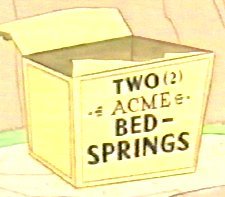
Why? A brand that stands for something can't shift on a dime to stand for something else. A brand can't be a breath mint and a floor wax. The author knows this. Brands that stand for everything stand for nothing. Think "Acme" from the Road Runner cartoons and you see what I mean - do you think Google wants their brand to be the "Acme" of the 21st century? Hmm.

Besides, if the author's intent was to characterize the Google "brand" as adaptive, expansive, niche filling, opportunistic, broad-based (etc) the metaphor of choice shouldn't have been stem cells. Perhaps kudzu, or bamboo. Or nutria. Except those are even more inflammatory and unhelpful.

Best not to have written the piece in the first place, I think.

(You can read what the Slashdot crowd had to say about Gabriel's article here.)

Monday, April 10, 2006

innovation: starbucks goes to the movies

As part of our endless pursuit of caffeine the wife and I stopped at one of our many local Starbucks yesterday afternoon. The smiling baristae were each wearing green tags bearing big words like "pulchritude", "euonym" and "pococurante".

I was intrigued.

After I claimed my coffee (black) and my wife's venti mocha soy latte amontillado fresco (not-black), I went on to discover a large number of equally green coasters artfully scattered throughout the place. Then I noticed that even the cardboard heat shields protecting my hands had been drafted for flash-card duty.

It was all part of a clever (and much broader) integrated marketing campaign designed to promote "Akeelah and the Bee", which opens on April 28th. The movie, "co-presented" by Lionsgate Films, 2929 Entertainment and (surprise!) Starbucks Entertainment, is the "inspirational story of a precocious eleven-year-old girl (Keke Palmer) with a gift for spelling."

(Of special note is Starbucks' use of typography to create a distinctive mood; check out the microsite created for the campaign, then imagine what it would have looked like in Caslon or Perpetua.)

Whether the precocious eleven-year-old girl displays an equally precocious gift for pulling the perfect short shot of espresso remains to be seen, but I had to admire the complete committment in evidence at Starbucks to push the movie. I'd never seen Starbucks throw down a promotion like this - but when I read reports that they're getting points off the gross, it made perfect sense.

This campaign is the first of what I anticipate will be a new trend in how movies are marketed.

Why? Starbucks can deliver the movie's message directly to the ideal buyer - coffee-drinking socially-conscious brightniks with well-thumbed thesauri and a social conscience - with greater efficiency than Lionsgate could ever manage. It's a great example of targeted marketing.

It's also good business - for both Starbucks and Lionsgate. With only $10 million spent (allegedly, per the above link) to make the darned thing and a minimal marketing spend on their own, even if audiences punt on the theatrical release Lionsgate will more than make it up on DVD. Which we'll all be seeing at Starbucks come June. Along with the soundtrack.

So here it is: Lionsgate makes movie, jobs out marketing to an efficient partner, pays a few points on the gross. It might not set the world on fire, but it's a perfectly conservative strategy for optimizing profit and minimizing risk. It's even better for Starbucks - I can bet their exposure is limited but their upside is huge. In return for "delivering" their customer base, of course.

And that's the key to the future for this trend.

If it works, expect more of the same not just from Starbucks, but from the likes of Target and Borders as well (for example). Speciality retailers with lifestyle brands are uniquely positioned to match audiences with product, which as you know is the most difficult, most risky part of the movie-making business. It's so simple it makes my eyes hurt.

Old-fashioned product placements won't go away - but they're purely pay-for-play exercises from now on. The real money will be in what Starbucks is doing. My hat's off to their marketing department for getting it right.

Sunday, April 09, 2006

tagged: this does make you think

I AM: An artist deep undercover in corporate America. So deep that sometimes I forget I'm an artist. Or what art is. Or who I am. But I never forget that I'm just good enough to stay undercover, but not good enough to really, truly win.
I WANT: To make people laugh more often, starting with my wife, whose laughter is like sunshine and rain.
I HATE: The tedious, the conventional, the repetitive, the unimaginative, but mostly, the soulless.
I MISS: The ocean.
I FEAR: Losing my voice.
I HEAR: Only what I want to hear, which often means I don't hear what I need to hear.
I WONDER: What it would feel like to be totally fulfilled by my work.
I REGRET: Not being totally fulfilled by my work, but not so much that I'd trade "fulfillment" for "caring for my family".
I AM NOT: Easy to love.
I DANCE: With the angels to "Shoot to Thrill" by AC/DC, the soundtrack of heaven.
I SING: Better, and less, as I get older.
I CRY: At beauty, futility and loss.
I AM NOT ALWAYS: Kind. And I know it.
I MAKE WITH MY HANDS: Music that never seems to express *exactly* what I'm feeling, so I just have to keep trying.
I WRITE: Because it's my way of opening the door to the cluttered closet of my head armed with St. Vincent de Paul boxes.
I CONFUSE: Activity with progress.
I NEED: To lead more and explain less.
I SHOULD: Get to the gym more often.
I START: With good intentions.
I FINISH:
With forgiveness for not meeting them, and try again. It's either ADHD, or a sign of someone who hasn't quite figured out what's worth starting.

brautigan: nine things


It's night

and a numbered beauty
lapses at the wind,

chortles with the
branches of a tree,

giggles,

plays shadow dance
with a dead kite,

cajoles affection
from falling leaves,

and knows four
other things.

One is the color of your hair.


Nine Things
by Richard Brautigan
from The Pill Versus The Springhill Mine Disaster
(Dell Books, 1968)

photo by Keith Stanley, copyright 2000

Saturday, April 08, 2006

review: coca-cola blak


I first met Coca-Cola Blak in the local grocery store the other day carrying a MSRP of $4.99 for a 4-pack of 8-oz bottles, but "on sale" for $1.99. A quick scan of the label revealed that Coca-Cola Blak was a "Carbonated Fusion Beverage".


I held out a small hope that the beverage might facilitate multiple nuclei joining together to form a heavier nucleus, accompanied by the release or absorption of energy depending on the masses of the nuclei involved. But in this case "fusion" meant that in addition to carbonated water and high-fructose corn syrup, I could look forward to some coffee extract if I elected to drink it.

I put the bottle down and backed slowly away from the display. I still have Pepsi Kona flashbacks, and wanted no part of this latest foray into cola/coffee hybrids.

So when the wife came home today with a 4-pack - unannounced, I'll have you know - I decided to face my fear; three hours later, properly chilled and decanted into a clean glass, I am about to explore Coca-Cola Blake Blak.

Let's take a sip. . . oh my.

Observations:
  1. Something distantly related to coffee flavor lurks in this stuff.
  2. Frankly, it tastes more of coffee on the way back up (burp-wise) than it does on the way down.
  3. It's diet-cola sweet instead of gum-receding regular cola sweet.
  4. It has the mouth-feel of a root beer Dum Dum lollypop that's been rolled in aspartame first, with an aftertaste that carries notes of old leather, hedgehog and regret.
After washing my mouth out with the soothing neutral flavor of tequila, I discovered that BevNET weighs in on this drink as well: "The taste of the product is enjoyably sweet and creamy, but the aftertaste is somewhat brutal, with bitter flavors of coffee and aspartame left behind."

Nice job, Coca-Cola. In a side note to the MBAs running product naming, I wanted to mention that putting a long bar over a vowel makes it a "long vowel", which means your product is pronounced Coca-Cola "Blake". Time to brush up on your phonics.

Friday, April 07, 2006

story: selling seashells


In the summer of 1971 my family - all seven of us - piled into the blue station wagon and drove six hours to Woods Hole, into the car ferry, and onward to Oak Bluffs, Marthas Vineyard. We stayed in a rented house on Sengekontacket Pond, where I turned over rocks searching for eels most evenings before dinner. One afternoon I filled a bucket full of periwinkles and brought it inside at lunchtime, promptly forgetting about it when we went out to Edgartown afterward. We came back to find they had crawled out of the bucket and scattered; by the time we left that house, the kitchen smelled faintly of rotting shellfish from the ones who scattered the best.

One morning we went to the beach; there had been some sort of storm the night before, and I had never seen so many shells. I filled a canvas bag with them, my knotted shirt, my sneakers. I brought them back to the house and sorted them by size, by quality, by color. I imagined taxonomies and applied them, wondering what sort of storm could have separated so many creatures from their shells. My castoffs littered the strip of sand behind the house.

That summer I returned home with a collection of shells in a slightly damp shoebox I had begged from one of the merchants on High Street in Oak Bluffs. Even mixed up I knew their value, I knew which ones were the real treasures, and which were the curios. I didn't wash them as well as my mother might have wanted, and they still smelled a bit like seaweed and old periwinkles.

We lived in Red Oaks Mill on Lakeview Road, near Poughkeepsie, in the sort of neighborhood where kids rode bikes and cars drove slowly. Our driveway ran parallel to the Coffin's house next door, leaving a narrow strip of grass about three feet wide for the mailboxes.

That's where I set up a folding table, a folding chair, and an old white wooden drugstore display Eddie Coffin let me use. I organized the seashells in the alcoves of the display, keeping a few of the best hidden in a compartment behind a broken balsa door at the back of the display.

My mother has a picture of me sitting in that chair at the end of the driveway behind my seashell stand. There are two kids on bikes looking at the display.

They wanted to know why they should pay anything for stupid seashells, because they're free.

Yes, but these are from Martha's Vineyard, I explained. There was a storm, and these came up from the deep waters of Nantucket Sound. Shells like this aren't seen there, hardly ever, and besides, when are you going to Martha's Vineyard?

I sold a few, I forget for how much.

There isn't a picture of the old lady from next door who walked over and spent a good long while looking over the shells. She asked if she could pick them up, and I said sure. I remember she lifted them up to her nose and breathed them in, her eyes closed. They smell like sunshine and the ocean, I told her, and she nodded. They smell like summertime, Bobby, but they won't for long, she told me, and she put them back into the little alcoves of the display one by one.

I don't remember if I was able to convince her to take one, but in any event, my career as a shell salesman lasted for just that day, and the shells stayed in the box for about a week more before my mother told me to wash them or throw them out. I buried them in a hole down at the bottom of our backyard next to Sox's doghouse.

observed: stumbleupon

StumbleUpon is a fiendishly simple concept executed flawlessly.

To grok the concept, imagine all of the websites in all of the world are laid out on a big dartboard in their normal mixed-up state. Everything.

StumbleUpon hands you darts that are designed to hit just the stuff you're interested in. Exactly what sort of stuff, you don't know. That's why you throw the dart.

Or in this case, you hit the Stumble button that StumbleUpon installs in a neat little bar in your browser. And voila, you get something unexpected. In the few hours I've spent playing with it, I'm astounded at how well it work.

Then you decide whether you like what you've hit, or not. Or frankly, you don't have to do anything. Unless you want to throw another dart (hit the Stumble button again, that is).

What you hit depends on what sorts of things you've decided to tell StumbleUpon that you like; StumbleUpon then uses an index of websites that other users have tagged to decide what to show you.

You Stumble, you give a site a thumbs up or down, maybe even leave a comment if you like, then you Stumble again.

The fiendishly simple concept is preference-based guided browsing. The index gets smarter and bigger based on the size of the user base - more people bring more sites and more opinions. It's still all about browsing - but it manages to bring a sense of community via a very rich personal profiling system that automagically shows you how your interests align with those of people who like the same sorts of sites you do.

When you consider the broad range of subject areas StumbleUpon exposes as preference areas, it allows users ways to define themselves in equally broad terms. And that's doesn't include your personal preference areas, which reveal your connections to other users.

I installed it into my Firefox browser earlier this evening, and I'm already wearing out the Stumble button.

It makes the "I Feel Lucky" button in Google seem stupid. Because it is. I dont' want to see random s--t, I want to see random s--t I'm actually interested in. And there's the difference.

If you've been trying to find a way to get past the 90% of the internet that's crap to the 10% that rocks, install StumbleUpon immediately.

(Edit - I love how they position their value-add stuff - you "sponsor" StumbleUpon at a level that makes sense to you, kind of like National Public Radio. Heaven knows this can't be the only way they plan to make money, but it's a beautiful way to reinforce the sense that you're part of the StumbleUpon community. Nicely done.)

motto: care of daniel waters

showmanship: how to pitch

Every few months an article appears with advice on how to give presentations like Steve Jobs. There's one from yesterday's Business Week Online edition making the Digg rounds right now (current count: 657 923 1236) that is a bit more lucid than other such how-to guides. I even sat through a pitch by Guy-san in which he described his great 10/20/30 presentation rule: 10 slides in 20 minutes using a 30-point font.

But there is only one Steve, only one Guy-san. You can't be them, and you have to give a pitch.

Coming off a panel discussion I moderated at Software 2006 earlier in the week in Santa Clara, I have decided to make this topic simple for you. If you want to give a good pitch, give the sort of pitch that you'd like to see. When phrased in those terms, some global realities become self-evident:

No one likes eye-chart slides. They demonstrate a laziness on the part of the presenter, and guarantee that few if any of the facts will be remembered. Blaise Pascal once apologized to a reader for having written a long letter, arguing that he didn't have the time to write a short one. Guy-san's 30-point font maxim forces you to be brief. It's good advice.

No one likes dishonest enthusiasm. Only a few people on the planet can run around a stage bellowing "developers" over and over again and get away with it. You're not one of them. If you feel good about the topic, let it show. If you don't. . .don't over-sell enthusiasm you don't feel, and keep your personal feelings far away from the pitch.

No one likes to be surprised. Off-topic mystery content doesn't help you any. This includes anecdotes, metrics, and off-topic lines of discussion spawned by off-topic Q&A.

No one likes to be confused. If you have to make a point that is built on previous points, make sure the logic works.

Laughter is universal, but humor is personal. If you insist on opening up with a joke, move to the Catskills. The sort of humor that works best is the humor of the obvious, and even better, humor about yourself. The best laughs Bill Gates has gotten lately were when he did a search on himself as part of apitch and found (perhaps on purpose) some not-so-flattering references to himself in a Celebrity Deathmatch.

Everyone likes a clean summary. When you wrap up, wrap it up in a bow. Then stop. And say thank you.

Above all, and I mean above all, you have to love to pitch. Really love it. Anything you truly love to do you treat with respect, and that includes preparing ahead of time, relaxing before you go on, and smiling into the lights. If you're not having fun, that shows faster than an open fly or 5-o'clock shadow.

So have fun and pitch.

Thursday, April 06, 2006

research: the long tail of the global ISV market

If you have a subscription to IDC, and if you care about the ISV marketplace, go dig up IDC report #34674 from December 2005.

Here's the abstract:

This IDC study forwards a reliable approach to addressing a vexing question that has dogged the software industry: Just how many independent software vendors (ISVs) are there in the world? Although IDC has developed techniques that enable us to account for the total worldwide software revenue, this is the first time that we have also established the total number of worldwide ISVs. IDC has therefore developed a model — presented here — that enables us to calculate the total number of worldwide independent software vendors, segment these vendors by revenue size class, and identify their collective revenue contribution.

"Although a relatively small number of ISVs account for the majority of the worldwide software revenue, the large number of ISVs with annual revenue less than or equal to $10 million are really the unsung heroes of the software industry," said Stephen D. Hendrick, group vice president of Application Development and Deployment research at IDC.


Whether you agree with the model or not, it's a fascinating take on segmentation. Next time you get a chance to do a customer survey, make sure to ask some "how big are you" questions that break up the "low end" of the market into smaller pieces, like <$1M, $1-5M, $5-10M. Each of these segments are unique, representing companies in different stages of "becoming".

And if your company doesn't have a subscription to IDC, go get that fixed. Quality research is a must-have.

shift: gnostics on the march

The New York Times is reporting today that having failed to find a buyer, a Zurich book dealer recently turned a 1,700-year old Coptic codex over to the Maecenas Foundation who, in partnership with the National Geographic Society and armed with a cool $1 million from Ted Waitt's (Gateway's ponytailed founder) foundation, translated it and published. . .

. . .the text of a Gnostic "gospel" attributed to Judas Iscariot.

(Links to a PDF translation and a nifty interactive "viewer" on National Geographic's Website)

The reason I bring this up is that I believe it is useful - and healthy - to question conventional wisdom. Especially if you belong to the school of thought that believes history is written by the victors - which translates into the software game as "this is how we do [blank] because it's the way we've always [blanked]" where blank equals sold, priced, positioned, built, updated, etc.

trend: physical security for digital content?


I had a fascinating discussion last night with fellow product manager at one of the more well-known software suppliers to the entertainment industry.

Here at the shop we've focused on "issues" associated with the distribution and marketing of entertainment products. I was surprised to learn that the studios are dealing with similar" issues" during the production process. Mmmmm . . . . issues.

One reason is that so much of the production process is either switching or has already switched over to HD digital video. Because of that, securing this content has become a topic of great concern. You could imagine some unscrupulous PA grabbing a copy of the dailies, for example, and sneaking it out the door.

For digital works-in-progress, we talked about the real possibility that protecting this content could become more physical - locking cabinets, individually-issued dongles, hand-carrying hard-drives, muscular thugs - instead of more digital. In the absence of production-phase DRM, what other options are there?

I don't think software producers have the same issues - in-process software doesn't have the same value to customers as in-process entertainment goods (esp. movies and music).

Bottom line - it's fun to compare notes, PM to PM.

Wednesday, April 05, 2006

status: survey of rss readers used to access ack/nak

How do you prefer to consume blogs? Web? RSS Reader? Browser bar in Firefox?

If my numbers are any indication of more global trends, here's how it shakes out from the RSS reader perspective:

25% - Firefox Live Bookmarks

20% - Bloglines

8% - Safari RSS

7% - NewsGator Online

3% - "A Java-Based Feed Reader"

2% - Feedblitz (email-based subscription)

32% - "Other Readers", which includes Google Desktop, My Yahoo, SharpReader, Windows Media Center 2005 Feed Reader, "Windows RSS Platform", Bitacle, FeedChecker, NetNewsWire, NetVibes and Omea Reader.

On another topic, big thanks to reader Huy Nguyen of Stream Theory for bringing this to my attention - seems my "subscribe by email" widget was broken - lord knows how many of you have been living with profound disappointment over your inability to enjoy ack/nak via email (as opposed to the very popular RSS feed or reading it on the web.)

In any event, it's fixed now.

With the steady growth in web and syndicated readership I've been experiencing of late, I'd hate to see anyone turned away.

If you continue to have problems, Huy recommends that you close and re-open the browser to get it to work. "Must be some caching, cookie problems with the browser", he suggests. Beats me.

news: apple ships software for booting winxp on its computers

Apple announced this morning the immediate availability of software that allows users to boot the Windows XP operating system - or the Mac OS X operating system - on their new Intel-based computers.

Bold statement: this effectively ushers a new era of choice in desktop computing, especially for home users.

The new Boot Camp software doesn't come with a copy of the Windows XP OS - you have to buy that separately (for about USD $140 or so). And they're not going to provide support for the Windows OS. But if you want to install WinXP on one of their new machines, this makes it possible.

Boot Camp is currently a public beta - you can download a copy here. Apple goes on to mention that they will be building the capabilities of Boot Camp into Mac OS X 10.5 "Leopard".

Apple stock was up $4 or so early in trading today. This is truly good news for Apple, and good news for folks like me who have a huge investment in software that they don't want to replace, but who want to become part of the "apple fanily".

Look forward to even larger hard drives on new Mac hardware to support customers who want to run in a dual-boot configuration.

And I wonder if this will cause an even longer delay in the Windows Vista consumer edition launch as the bright folks in Cupertino and Redmond test this OS on MacTel hardware.

Well done, Apple.

(End of day edit: The New York Times reported that shares of Apple jumped $6.04, or 9.9 percent, to close at $67.21 this afternoon in Nasdaq trading. Shares of Microsoft rose 10 10 cents, to $27.74.)

lesson: working with beta software

The beta review process is, as I've said previously, a little like inviting your mother in law over to the house - you worry that you didn't clean the oven, or any other of thousands of details that need to be addressed. But you want her to come over, so you do your best.

(For the record, I love my mother-in-law, and no, she doesn't check the oven. Baseboards, however. . .)

In keeping with the laws of karma, I decided a long time ago to try and always be a good beta tester. To make the effort to understand what the author is trying to accomplish, and to see whether or not that goal is accomplished in the beta product. To provide honest feedback. To be timely.

To be hopeful. Because that's what betas are all bout, in my mind.

Speaking of beta feedback - while I'm not quite sure why You Mon had to think twice about making the post on the Boxxet blog regarding my participation in the Boxxet beta, I'm certainly flattered that he did. Thank you.

Tuesday, April 04, 2006

design: the world's most perfect user interface


This beauty was introduced at the Messe music show and was featured prominently on a variety of gadget blogs (most notably Engadget and Music Thing) over the last week.


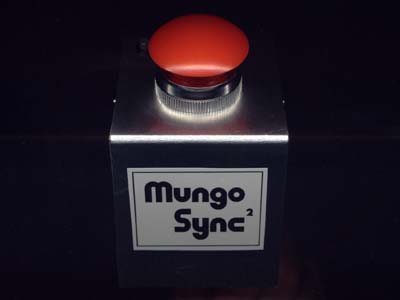
It's a triumph of interface design. I mean, just look at the thing! How many years have you joked about customers who ask for "big button interfaces"? Well, here is one!

You almost don't need to care what it is. But if you're a dance club DJ and you have a problem keeping the beat going as you switch from one song to the next - and a bigger problem getting your next song into sync with the beat of the first one - well, this is your lucky day. Read about it here and go buy one.

But for us software types, it's a thing of sheer beauty. Add it to your clip-art gallery and drop it into a presentation for kicks as an example for what your customers really want from your user interface. Simplicity. Intuitive usage. A big red button with satisfying tactile feedback.

Awesome.

Sunday, April 02, 2006

o'brien: keats and chapman on mineral wealth


It is not generally known that . . .

O excuse me.

Keats and Chapman (in the old days) spent several months in the county Wicklow prospecting for ochre deposits. That was before the days of (your) modern devices for geological divination. With Keats and Chapman it was literally a question of smelling the stuff out. The pair of them sniffed their way into Glenmalure and out of it again, and then snuffed back to Woodenbridge. In a field of turnips near Avoca Keats lay for hours face down in the muck delightedly permeating his nostrils with the perfume of hidden wealth. No less lucky was Chapman. He had nosed away in the direction of Newtownmountkennedy and came racing back shouting that he too had found a mine. He implored Keats to come and confirm his nasal diagnosis. Keats agreed. He accompanied Chapman to the site and lay down in the dirt to do his sniffing. Then he rose.

'Great mines stink alike,' he said.

Mineral Wealth
by Flann O'Brien (Myles na Gopaleen)
from The Various Lives of Keats and Chapman and The Brother
(Paladin Grafton Books, 1990)

(for AlainB)

Saturday, April 01, 2006

fools: in defense of


Every year the first of April arrives and tries to remind us of something important.

But every year the message gets lost as the embarassing displays become more embarassing. Unfortunately, this year was no exception. Scoble joins Google! Yahoo buys all Web 2.0 companies! Wikipedia creates a comprehsive index of all April Fools hoaxes (really)!

It has been written by the smart and the clever that "they can't wait for the first of April to be over". And why not. Like all unsightly spasms, the faux inventiveness of the day leaves them feeling regretful and used and more than ready to return to their regularly scheduled daily diets of . . . sober, razor-sharp business . . . businessing and. . . technologizing.

When there is so much truly important stuff to work/opine/kibitz on, we humor April Fools Day as something for eight-year old practical jokers and OMG BARBIE LINUX LOL!!1!!!!

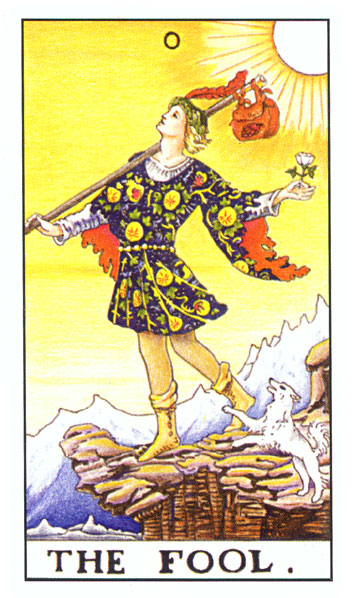
Which is too bad. April Fools Day is dedicated to the Fool, not the Idiot (sorry Fyodor). There's a difference.

As an archetype, the Fool is without question the most transformative and I would argue the most pervasive. A close relative of the trickster and the jester, the Fool is found in all major cultures, whether as the Native American's Coyote, the laughing Buddha, the Puca of Celtic myths, the Hanuman of Hindu traditions. . . the list goes on and on.

In the tarot - a big box of archetypes if ever there was one - the very first card of the major arcana is The Fool, who June Kaminski describes as follows:

The Fool is the ultimate "Free Spirit" - this card represents the self-actualized person, free from societal constraints, someone who is able to let go of outmoded beliefs and ideals with the courage to pursue their own special path.
There's even an argument to be made that the Fool is actually the hero of the Tarot, and the Major Arcana is the path the Fool takes through the great mysteries of life. This argument is supported by the image of the Fool in the tarot as a young man taking a step off a cliff - is he about to do something truly stupid, or is he making a leap of faith? Is he taking a fateful step into a new world, or just f-----g up again? (I like Kierkegaard's answer.)

My favorite representation of the Fool arrives at the end of the year. The traditional French Christmas creche contains not just the Christ child, manger scene and assorted animals, but a variety of traditional French village personalities. One is a familiar figure called Le Ravi, a young man with his arms in the air, overcome with joy. There are a variety of translations for Le Ravi: a common one is The Village Simpleton, who is described as "un villageois un peu simple qui lève les bras en signe d’admiration."

The Fool embraces uncertainty and change - then he takes that first fateful step. Whether he fails or succeeds, he makes the attempt. This is why I love April Fool's Day, because it is the one day each year when it's OK to be daring, extraordinary and maybe even a bit foolish. And each year, a few of the Foolish become overcome with joy, raise their hands up, and start something new.